
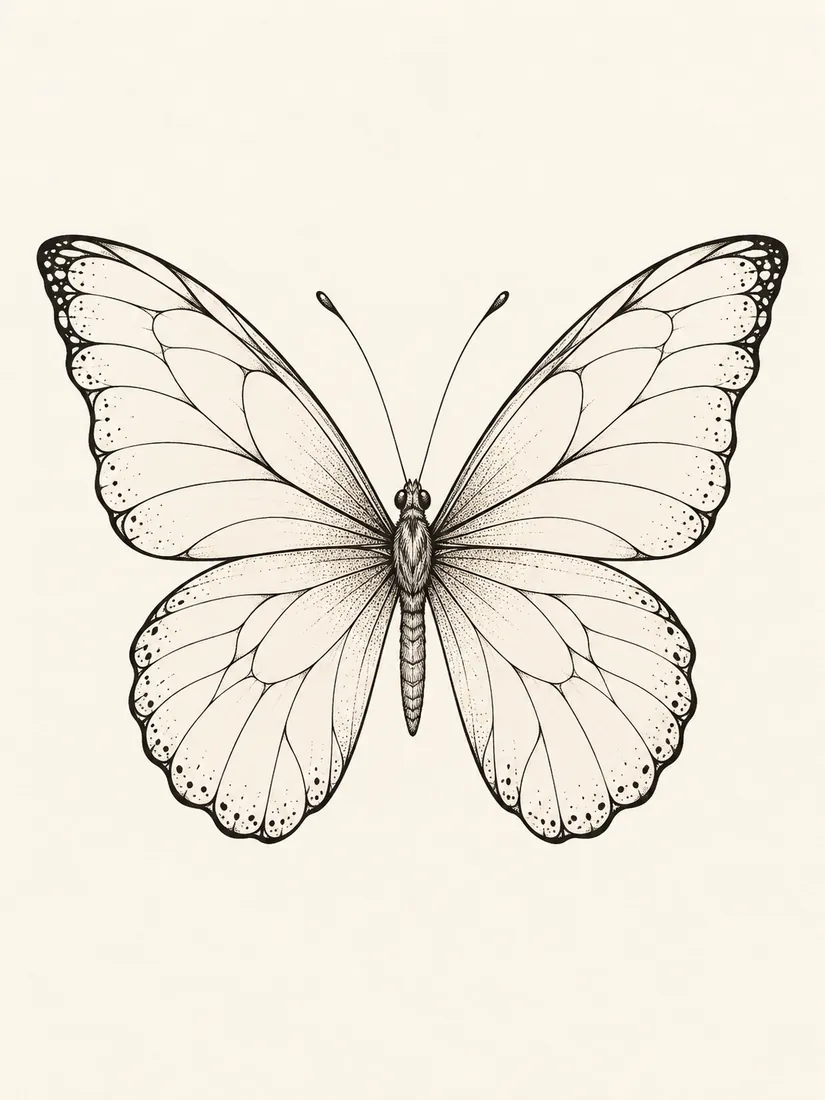
A butterfly can mark a change in your life, remember somebody, or simply be a shape you love. The butterfly tattoo meaning most often discussed is transformation, inspired by the insect's life cycle. Flight can also suggest freedom, while paired butterflies may carry a personal connection between two people. Those interpretations offer possibilities; they do not assign the same story to everyone who wears the design.
Your most useful decision is choosing which idea deserves to lead. A tiny open-wing outline and a broad floral composition can begin with the same subject and communicate very different moods. This guide connects the symbolism to visible design choices, so you have something more specific to discuss with an artist.
Why butterflies suggest transformation
The biological reference is clear: butterflies develop through egg, larva, pupa and adult stages. The Smithsonian explains this process as complete metamorphosis in its butterfly life-cycle guide. Connecting that process with a personal transition is a human interpretation of the animal's life, rather than evidence that a tattoo creates change.
You might use the image to mark moving somewhere new, completing a long project or changing the way you want to live. A butterfly does not need to document a painful experience to be meaningful. Enjoying its symmetry or remembering a garden can be a complete reason.
Write down the change, memory or visual quality that matters to you. “A lighter feeling after a demanding year” gives an artist a different direction from “an accurate drawing of a butterfly I saw with my grandmother.”
Cultural references need a specific context
Butterfly imagery appears in different artistic traditions. A documented example is Psyche: the Metropolitan Museum of Art describes butterfly wings on a version of Canova's Cupid and Psyche. That establishes a particular art-historical reference; it does not mean every modern butterfly tattoo carries the same classical story. See the museum's collection record.
If you want a design that refers to a particular tradition, start with the actual image, story or artwork. Explain the reference to your artist and ask whether they work in that visual language. Broad statements that one color or wing shape means the same thing across whole countries can hide important differences.
For a purely personal design, you can skip a cultural reference entirely. A butterfly based on a family memory does not need a historical explanation to justify its place in your life.
Decide what the wings should do
Wing position is a practical way to explore mood without filling the tattoo with additional symbols.
An open, symmetrical butterfly can feel composed and balanced. A three-quarter view introduces direction, making it easier to place the insect alongside a stem or follow a curve. A pair can create a relationship through size, spacing and movement. A butterfly tree can use several insects as a canopy, although the individual silhouettes still need room to read.
These are design interpretations, not fixed meanings. Choose the version that fits your story and the space available. You can compare these directions on the butterfly tattoo page, where the examples are labelled as design concepts.
Compare four styles using the same subject
Changing one visual variable at a time makes the comparison useful. Keep the wing pose and approximate composition while you compare these approaches:
| Style | What it emphasizes | What to inspect |
|---|---|---|
| Fine line | A light outline and open wing details | Clear separation between veins and outer edges |
| Blackwork | Strong dark shapes and contrast | Intentional areas of open space inside the wings |
| Floral | A connection between insect and plant | Whether the flowers support or hide the butterfly |
| Watercolor | Loose color accents around a readable structure | Whether the outline still works without the color |
For example, a butterfly intended to remember a garden could use one recognizable flower beside an open wing. Compare that with a version in which the wing itself becomes a flower. The second option is more interpretive and needs an especially clear silhouette.
Browse the style directory for actual examples before adding more detail. Ask your artist to adapt line weight and spacing at the proposed tattoo size. A beautiful large digital image can lose its intended hierarchy when reduced.
Color can be personal without becoming a code
You may choose blue because it recalls a place, orange because it suits a butterfly reference, or black because you prefer a graphic design. Those choices do not need an internet chart that assigns one emotion to every color.
If you want to depict a real species, use a reliable species reference and tell the artist that the wing markings matter. An AI concept may invent markings or combine features, so do not assume a generated butterfly is scientifically accurate.
For a personal symbolic design, exact species identification may not matter. Record whether realism is a requirement or an optional influence. That one distinction can prevent several rounds of revisions.
Match the composition to your placement
A small wrist design has different room for detail from a broad shoulder composition. The size of the wings, their angle and the amount of surrounding imagery should be considered together.
Use wrist concepts to compare compact layouts, or the placement directory to explore a larger area. A wide open-wing design needs enough space for both sides to remain clear. A narrow view can follow a longer shape but changes the appearance of the butterfly.
The photo try-on tool helps you compare position, rotation and relative scale on a photograph. It is a flat visual preview: it does not predict skin behavior, tattoo technique or healed results. Check the final placement with your artist, including how it looks when the body moves.
Build a design brief from your own meaning
Start with four decisions: the reason, the main image, the placement and the details you want excluded. Here is one example:
One open-wing butterfly with a small botanical stem. The meaning is a new chapter after moving away from home. Fine-line direction, generous space inside the wings, no quote, no date and no portrait. Please compare a compact wrist composition with a slightly larger forearm version.
A memorial brief could use a different flower, a species associated with a person or a date chosen by you. Those additions become personal references rather than claims that every butterfly represents bereavement.
The tattoo idea tool can help turn the same brief into several starting concepts. Change the wing pose or the supporting element between versions, then compare what remains clear. Check that the generated image has the intended number of insects, plausible wing connections and correct text if any is included.
Take the preferred concept to an artist who can redraw it for the chosen scale. Outline conversion may help you examine a draft, but it does not replace that adaptation.
Common questions about butterfly tattoos
Does a butterfly always mean a new beginning?
Transformation is a common interpretation, but memory, freedom, visual preference and other personal reasons are possible. The wearer's explanation matters more than a generalized definition.
Does a black butterfly have one specific meaning?
No universal rule assigns one meaning to every black butterfly tattoo. It can be a blackwork style choice, a reference to a particular image or a personal symbol. Ask about the intended context instead of inferring it from color alone.
Should a matching pair be identical?
They can be, but matching is only one way to express a connection. Two related designs can share a silhouette while using different plants or details. The couple tattoo examples offer more ways to compare that relationship.
Can a butterfly be a first tattoo?
It can be a design you consider for a first tattoo. Discuss placement, detail and your questions with a suitable artist; the subject alone does not determine suitability, discomfort or the number of sessions.
Choose the story you want to remember, compare two wing poses, and save one simple version alongside one detailed version. That gives your artist a clear starting point. After the appointment, use the tattoo aftercare guide with the instructions supplied for your own tattoo.
Sources and editorial notes
Research checked on October 16, 2026. Biological and collection facts are linked to their institutional sources. Symbolic interpretations, comparison examples and the design brief are editorial suggestions, without claims about a wearer's identity or personal history.