
A pineapple can recall a generous host, a beach holiday or a joke shared with one friend. Turn it upside down and some viewers may think of a contemporary relationship signal. Pineapple tattoo meaning depends on that context, along with the reason its wearer chose it. The fruit alone cannot tell you someone's relationship preferences. Nor does a cheerful design need a grand historical explanation. If you are considering one, the useful questions concern the story, the orientation and the details you want an artist to preserve.
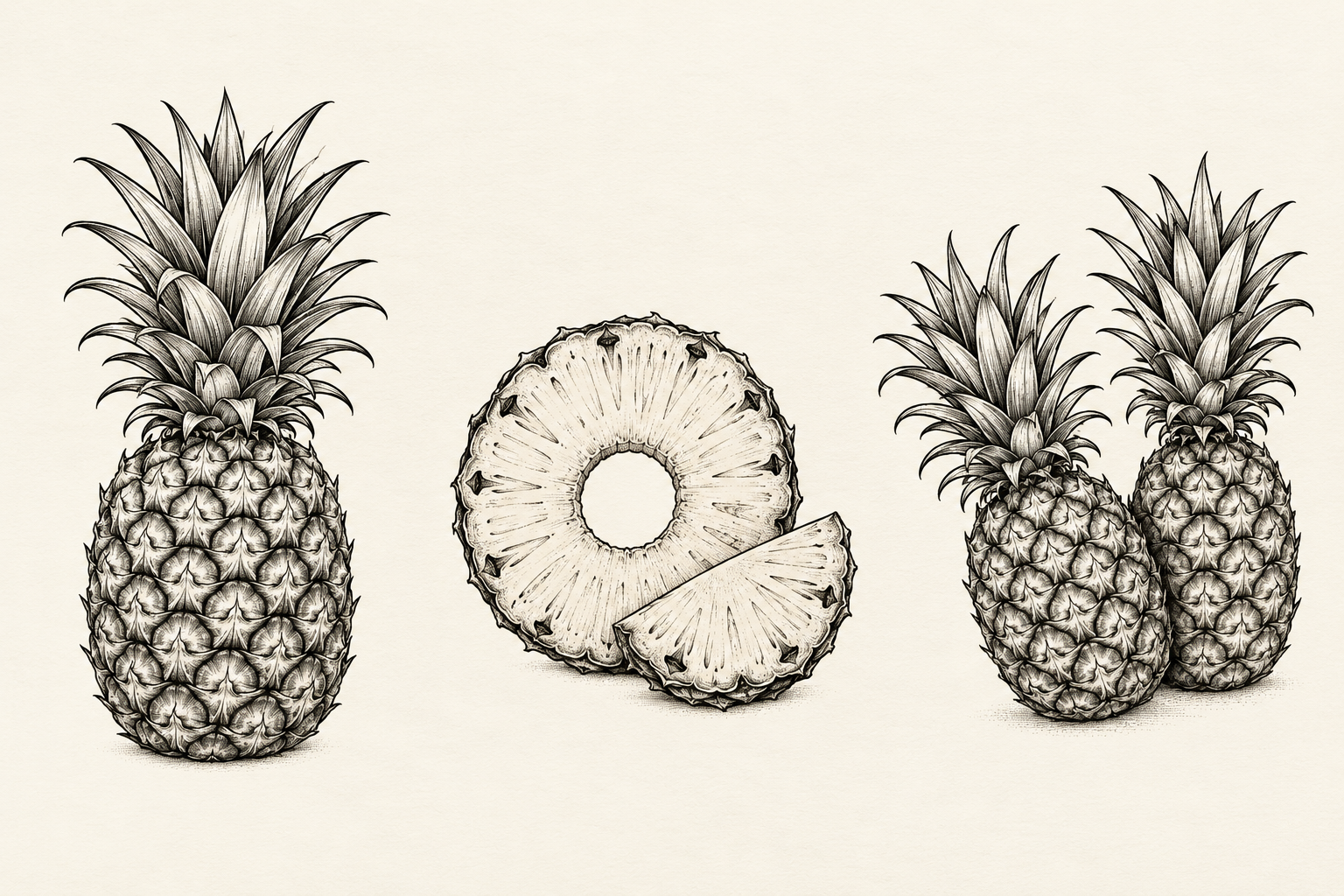
The cover is an AI-generated concept illustration showing an upright whole pineapple, a ring slice with a wedge, and two whole pineapples together. These are drawing studies for comparison, not photographs of tattoos on skin.
What a pineapple tattoo can mean to its wearer
Welcome and generosity make a natural starting point for someone who enjoys hosting. A chef might choose a whole pineapple to remember the first kitchen where they felt at home. A person whose friends regularly gather around their table might attach the same image to a very different experience. In both examples, the personal connection explains the tattoo more precisely than the word hospitality alone.
Pleasure and playfulness offer another direction. A pineapple slice might stand for the breakfast you ate on a particular trip, or simply a food you have always liked. You do not have to turn a fondness for fruit into a story about resilience. Decorative choices can be deliberate without carrying a hidden message.
Some wearers may read the contrast between textured skin and sweet flesh as a metaphor for being guarded but affectionate. Treat that as a contemporary personal analogy. It does not establish an ancient pineapple tattoo tradition or tell you how another person sees themselves.
For a friendship design, pick a shared detail that belongs to both people. Perhaps you worked the same summer job serving fruit drinks, or kept buying the same snack during a trip. Two small pineapples can record that memory without claiming that paired fruit has one recognized meaning. If you are comparing shared symbols, the family tattoo ideas can help you decide whether the fruit needs another element at all.
Why hospitality and wealth appear in the history
There is a historical basis for discussing the pineapple as a display of welcome, but the wording matters. Colonial Williamsburg's research-staff myth check gives serving a rare fruit to valued guests as the traditional explanation for the hospitality association. It also challenges a proposed Greek pinecone origin. That is a qualified account of an association, not a documented origin date for pineapple tattoos. See item 22 in Colonial Williamsburg's historical question-and-answer material.
Wealth is a related, distinct association. The National Trust's interpretation of Dunham Massey explains that pineapples were displayed in grand houses as symbols of wealth. That specific setting helps explain why the fruit can look both welcoming and ornamental. It does not mean every pineapple image celebrates luxury.
Imagine two briefs using the same upright fruit. One asks for a plain outline to commemorate opening a neighbourhood café. The other asks for a heavily ornamented fruit inspired by historic decorative objects. The first foregrounds welcome; the second could foreground display. Neither brief needs a returning-sea-captain story to make it credible.
If the history interests you, bring the actual object or text that caught your attention to the consultation. An architectural pineapple, a botanical drawing and a cartoon fruit will each suggest a different visual approach. Avoid adding an invented date or claiming your design reproduces a tradition that your reference does not establish.
What an upside-down pineapple tattoo might suggest
An upside-down pineapple can be read as a signal connected with swinging or non-monogamy in some contemporary social settings. Feeld's essay on fruit as sexual symbolism documents that modern discourse. The source supports the existence of an interpretation; it does not provide a reliable way to identify a stranger's private life from a tattoo.
Orientation is especially ambiguous on a moving body. A fruit that appears upright when its wearer looks down may face the other way to someone standing opposite. A wrist rotates. An arm lifts. A photograph can be turned. Those changes make a rigid visual rule even less useful.
If you want to avoid the association, tell your artist that concern directly and compare views with your arm at rest. A slice, a fruit grouped with a remembered food or another composition may fit your story better. None can guarantee how every viewer will interpret an image. The aim is to make an informed choice that you feel comfortable explaining.
For example, a bartender commemorating a favourite workplace could choose a ring slice beside a small glass outline. Someone intentionally referencing a relationship community might choose a different orientation and keep the rest simple. Their images could resemble each other while expressing different intentions. Asking respectfully, when conversation is welcome, gives you more information than treating either image as proof.
Whole fruit, slice or pair: choose the part that carries the story
A whole pineapple with its leaf crown
The complete fruit provides a distinct silhouette: a textured oval body topped by pointed leaves. It suits a design where you want the object itself to be recognizable at a glance. The crown also gives the artist a strong vertical accent, which can be useful when discussing a narrow placement.
In a hosting-related design, a simple whole fruit could stand alone. Adding a house, door, banner and date would introduce several competing subjects. Start with the fruit and ask which single extra detail, if any, improves the story. Compare the fine-line tattoo style if the leaf shapes and surface pattern are what appeal to you.
The word crown here describes the leaves. It does not automatically add royal symbolism. If confidence is your intended meaning, you can choose it; the fruit's anatomy does not require that interpretation.
A ring slice or wedge
A slice puts the focus on the edible fruit. Its round form can make a compact composition, while a separate wedge gives a small asymmetry. In the cover study, the central hole and the wedge are visible, making it a useful comparison with the tall whole fruit.
Picture a tattoo remembering a weekly lunch with a sibling. A slice may recall the food you shared more directly than a decorative whole pineapple. You could omit leaves, a sun and a travel date because they are unrelated to that particular memory. Comparing tattoo styles can help you decide how much information the drawing really needs.
Two pineapples together
A pair can represent two people if that is the intention you give it. Difference can be part of the composition: one fruit could lean slightly while the other remains upright. In the cover, the two fruits overlap and retain separate crowns. That visual relationship suggests a useful consultation question about how distinct each fruit should remain.
Matching tattoos also work when they are not identical. One person might prefer a whole fruit and another a slice from the same drawing style. Discuss which feature connects the pair before deciding that both tattoos must have the same size and placement.
Style changes the mood, not the official definition
A dark, strongly outlined pineapple can feel graphic and direct. Fine marks and selective shading may place more attention on the fruit's texture. Neither treatment assigns a new universal meaning. You can use visual weight to support your own story without presenting a style choice as a symbolic law.
If the memory is light-hearted, compare an airy outline with a denser shaded version. Ask which details remain recognizable when you view the design at its intended physical size. A large screen can make closely packed diamonds look clearer than they will at the scale you are considering. Your artist can explain which marks need more separation.
For a bolder direction, browse blackwork tattoo examples and pay attention to the balance between dark fruit skin and open leaf shapes. A fully dark body may need a different texture treatment from an engraved drawing. Copying every small mark from the concept sheet is not necessary to preserve the subject.
Colour is another choice to discuss rather than a promise about how the tattoo will look over time. If yellow and green are essential to your memory of the fruit, include them in the brief. If the silhouette matters more, a black-and-grey study gives you a useful starting comparison. Ask your artist to advise on the finished design for your skin and placement.
Placement and orientation deserve a separate decision
Choose a place where the shape works with the space you want to use. A tall whole fruit and a round slice ask for different proportions. The forearm placement examples offer a starting point for a vertical design; a wrist placement invites a different conversation about the available area and visibility.
Try a paper version at two sizes and look at it from normal viewing distance. For a forearm pineapple, check the relaxed arm and the palm-up position. Notice which end points toward your hand and how the crown sits when your arm hangs naturally. Take these observations to your artist rather than settling the orientation from one close-up photograph.
For a paired design, check that each fruit still has its own outline when reduced. If the crowns merge into one cluster, the intended relationship may become harder to read. Moving the fruit apart slightly could express companionship more clearly than adding a word underneath. Placement is a design decision; it cannot establish a person's personality or relationship status.
Prepare a brief you can actually discuss
Start with one sentence about why you want the pineapple. A useful example is: I want a whole upright pineapple to remember the café where I learned to cook, with a clear leaf crown and restrained texture. That gives the artist a subject, an orientation, a personal connection and a visual priority.
Then choose a contrasting version. You might compare that whole fruit with a slice, keeping the same memory and placement. The tattoo idea generator can help you explore composition as concept art. Inspect the result for merged leaves, uneven fruit patterns or extra pieces, and let your tattoo artist redraw the final design.
Bring your preferred image, the intended size, a placement photo and a short explanation of any association you want to avoid. If the answer is simply that you love the shape, that is enough information to begin. Pineapple tattoo meaning becomes more useful when it helps you make these specific choices. A fruit you can explain in your own terms is a stronger starting point than an impressive story you cannot verify.